The Vision
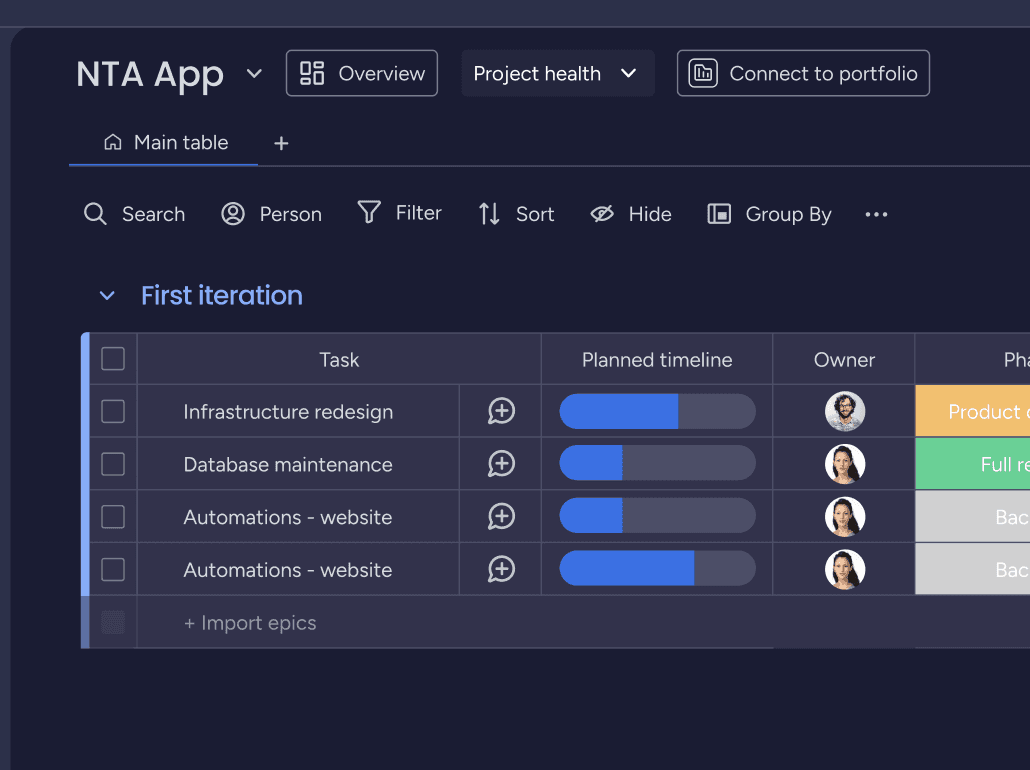
Leaders across Enterprise accounts were forced to “guess” how engineering work mapped to business initiatives. Portfolio and dev lived in separate worlds:
Business stakeholders tracked initiatives, timelines, and owners in Work Management
Engineering teams worked in dev boards with their own hierarchy and Agile structures
There was no easy way to see both sides side-by-side, or to understand progress at a glance
The vision for Portfolio × monday dev was to eliminate that guesswork:
Put business projects and dev epics in the same place, and give leaders a clear “battery status” of progress across the entire organization.
The Collaboration
Because this was the first multi-product collaboration of its kind, the work required:
Aligning cross-product design teams around a shared mental model of “hybrid portfolio”
Navigating complex tech constraints between the Portfolio product and monday dev’s Agile structures
Creating a flow and UI that felt natural to both business users and engineering teams
I drove this collaboration by:
Running highly organized workflows with developers and designers from multiple groups
Writing detailed meeting summaries, decisions, and open questions to keep everyone aligned
Initiating a user interview workshop to sharpen research insights and ground decisions in real Enterprise use cases
Key Design Decisions
Cross-product system thinking
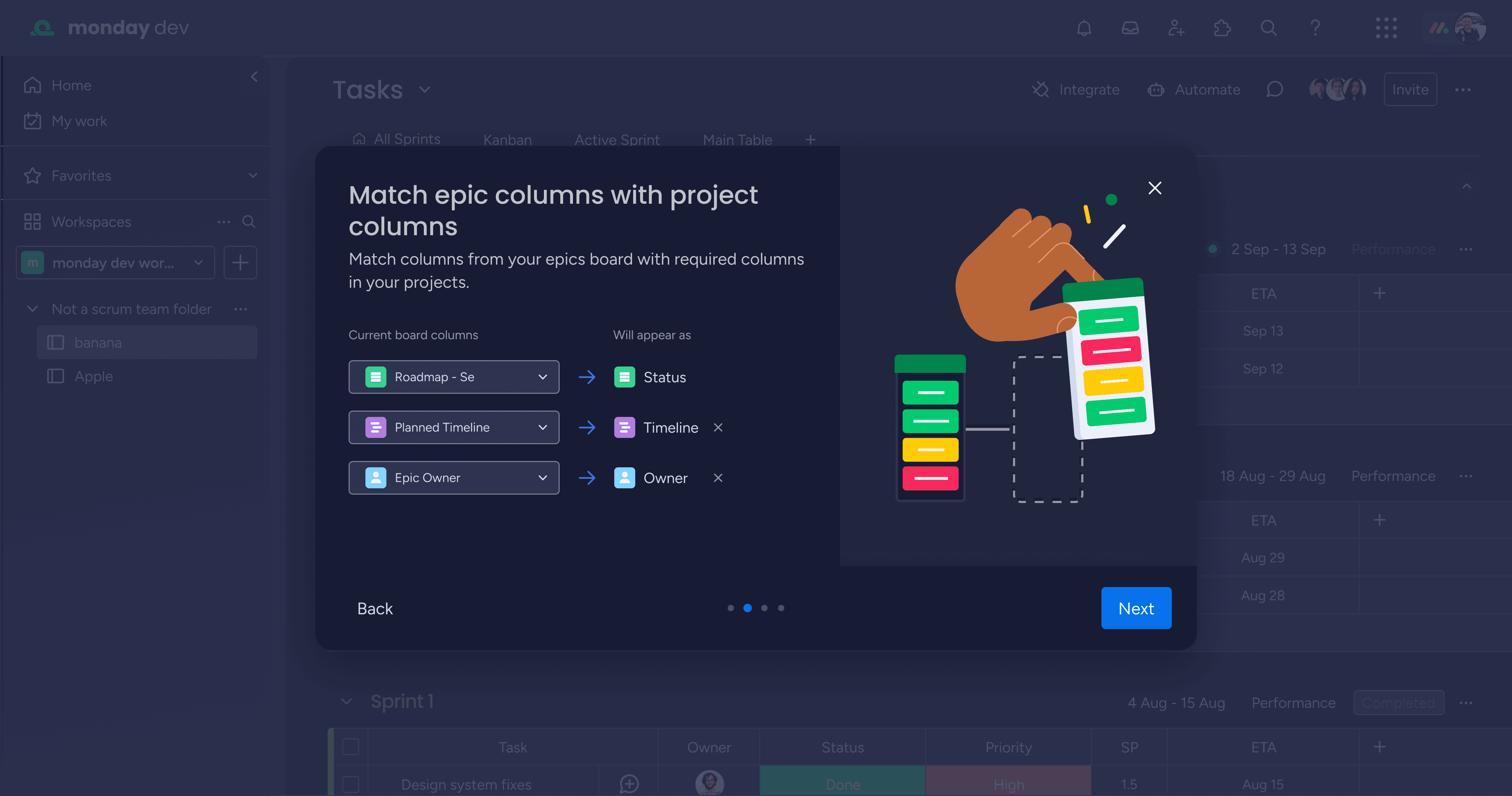
I designed an Agile project experience that connects monday dev with Work Management, making two products feel like one connected system.
One view for two personas
The flow supports both technical users and business stakeholders, showing each persona the right level of detail without overloading the UI.
Reusable cross-product patterns
I created patterns for seats, permissions, ownership, and terminology that made the flow feel predictable and safe, and were later reused by other teams.
Role-based information architecture
I grouped information by user need: setup and structure for dev teams, and status, ownership, and risk for portfolio managers.
Scalable design impact
Several patterns from this work were reused across products, with parts of the experience registered as design patents.
The Solution
In the alpha and beta, I intentionally designed the feature to support epics from a single board. That constraint helped de-risk the first iteration, fit early technical limitations, and validate the core “hybrid portfolio” concept with users.
Based on what I learned from moderated and unmoderated user interviews with Enterprise customers, and in ongoing collaboration with engineering around technical capabilities, I then evolved the design into a more robust system that can:
Handle multiple epic boards per project.
Support templates of complex, cross-team portfolios.